
If you've spent any time making beats, recording music, or shopping for instrumentals, you've heard producers say things like, "The 808s hit hard," or "Turn the 808 up." Today, the term 808 has become almost interchangeable with bass in hip-hop, trap, drill, and modern pop music.
But here's the interesting part:
An 808 isn't actually just bass.
The name comes from a drum machine that changed music forever.
What Does 808 Mean in Music?
The term 808 refers to the bass drum sound originally created by the Roland TR-808 Rhythm Composer. While the original machine was released in 1980, today producers commonly use the word "808" to describe deep sub-bass sounds inspired by that legendary kick drum.
What Is an 808 Beat?
An 808 beat is a song or instrumental built around deep sub-bass, heavy low frequencies, and basslines inspired by the Roland TR-808. Modern trap, drill, hip-hop, and melodic rap all rely heavily on 808s to create power, emotion, and movement.
What Are 808s in Music?
In modern music production, 808s usually refer to tuned bass sounds rather than the original drum machine. Producers stretch, pitch, distort, and shape these bass notes to become part of the melody and rhythm of a song.
The Roland TR-808 Changed Everything
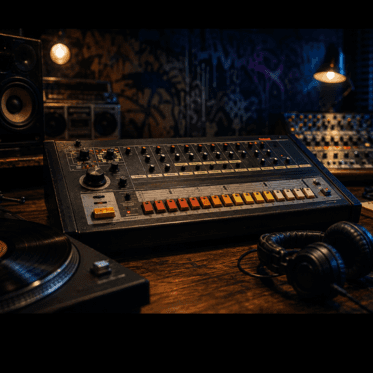
The term 808 originates from the Roland TR-808 Rhythm Composer, a drum machine released by Roland Corporation in 1980.
At the time, musicians weren't impressed.
Instead of using realistic drum recordings, the TR-808 created sounds electronically using analog circuits. Many artists thought it sounded too artificial compared to real drums.
The machine wasn't a commercial success and was discontinued after only a few years.
Ironically, that failure became one of the greatest accidents in music history.
As used TR-808 machines became inexpensive, underground producers, DJs, and hip-hop pioneers started experimenting with them in ways Roland never imagined.
What Made the 808 Bass Different?
Among all the sounds inside the TR-808, one stood out more than anything else:
The kick drum.
Unlike a traditional kick, the TR-808's bass drum had:
Extremely deep low frequencies
A long decay that could be extended
A smooth, rounded tone
Powerful sub-bass energy
Instead of simply keeping rhythm, producers realized they could tune and stretch the kick into an actual bass instrument.
That discovery helped create the foundation of modern hip-hop production.
From Drum Machine to Bassline
Early hip-hop producers began pitching the TR-808 kick to different notes, allowing it to follow the song's chord progression.
Instead of hearing a short drum hit...
Listeners heard a deep bass note.
Eventually, producers layered these bass notes throughout songs, creating entire basslines using the original TR-808 kick.
This technique became one of the defining sounds of hip-hop.
Today, when producers say "808," they're usually referring to pitched sub-bass samples inspired by the original TR-808 kick, not necessarily the drum machine itself.
Why Are 808s So Popular?
Modern music relies on emotion.
Nothing creates emotion quite like low frequencies.
A well-designed 808 can make a record feel:
Bigger
Darker
More emotional
More cinematic
More aggressive
More energetic
Because 808s occupy the lowest part of the frequency spectrum, listeners often feel them before they consciously hear them.
That physical impact is one reason they're so effective in clubs, cars, headphones, and live performances.
Who Made 808s Popular?
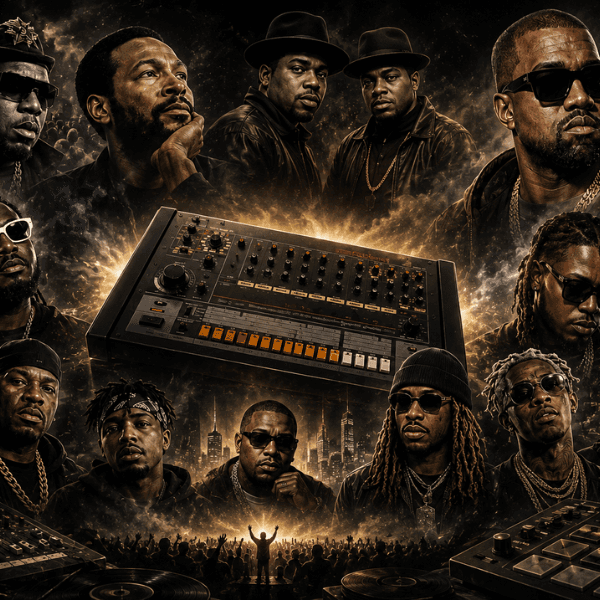
Although the Roland TR-808 appeared in 1980, countless artists helped turn it into one of the most recognizable sounds in music.
Some of the biggest names include:
Afrika Bambaataa
Marvin Gaye
Run-D.M.C.
Kanye West
T-Pain
Lex Luger
Metro Boomin
Southside
Future
Young Thug
Chief Keef
Travis Scott
Each generation pushed the sound further, helping transform the original drum machine into the foundation of modern trap and hip-hop.
How Trap Music Revolutionized the 808

While hip-hop embraced the TR-808 during the 1980s and 1990s, trap producers transformed it into something entirely new.
Instead of using short kick sounds, modern producers began creating:
Long sustained bass notes
Sliding 808s
Gliding pitch bends
Distorted bass
Saturated sub frequencies
Aggressive bass drops
Artists like Future, Young Thug, Chief Keef, Metro Boomin, Southside, Lex Luger, and countless others helped push the sound into mainstream music.
Today, 808s define much of modern trap, drill, rage, melodic rap, and even pop production.
808s Aren't Just for Trap
Although they're closely associated with trap music, 808s appear in almost every genre today.
You'll hear them in:
Hip-hop
Trap
Drill
R&B
Pop
EDM
Afrobeat
Reggaeton
Latin Trap
Hyperpop
Lo-fi Hip-Hop
Alternative Hip-Hop
Modern producers shape 808s differently depending on the mood of the record.
Some are clean and smooth.
Others are distorted, fuzzy, or intentionally aggressive.
How Producers Make 808s Hit Hard
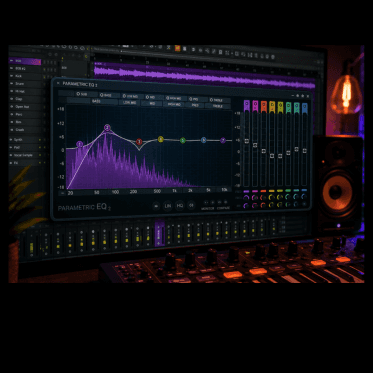
A powerful 808 isn't simply about turning up the volume.
Professional producers focus on several techniques:
Choosing the Right Sample
Everything starts with a quality 808 sample that fits the mood of the beat.
Tuning the 808
Because 808s play musical notes, they should be tuned to the song's key to avoid clashing with melodies.
Saturation and Distortion
Light saturation helps an 808 become audible on smaller speakers without sacrificing low-end power.
Sidechain Compression
Many producers create space between the kick drum and the 808 using sidechain compression so both remain punchy and clear.
Pitch Slides: The Secret That Makes Trap 808s Feel Alive
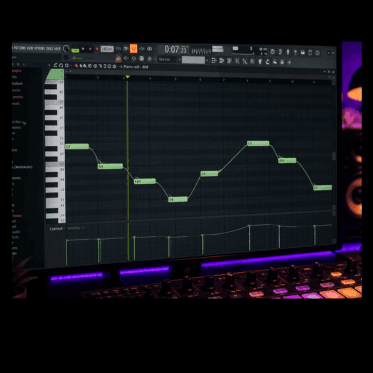
If you've ever listened to a Future, Metro Boomin, Southside, Travis Scott, Chief Keef, or Young Thug record and wondered why the bass seems to move instead of simply play notes, you're probably hearing 808 pitch slides.
Unlike a piano, where one note ends before the next begins, a sliding 808 glides smoothly from one pitch to another. Instead of jumping instantly, the bass bends, stretches, and flows between notes, almost like it's singing underneath the beat.
That single technique completely changed modern trap music.
Before pitch slides became popular, bass usually stayed locked on individual notes. Trap producers realized that by letting the 808 glide between pitches, they could create tension, release, and movement without adding another instrument.
Suddenly, the bass wasn't just supporting the beat.
It became part of the melody.
Listen closely to many of today's biggest trap records and you'll notice that the 808 often carries just as much emotion as the piano, guitar, or vocals. A well-placed slide can make a beat feel darker, more aggressive, more emotional, or even hypnotic—all without changing the chord progression.
That's why producers spend so much time perfecting their slides. Too much movement can make a beat sound messy, while a perfectly timed glide can become the moment listeners replay over and over again.
In many modern trap, drill, rage, and melodic rap records, the 808 isn't simply holding down the low end.
It's performing.
Mastering pitch slides is one of the biggest differences between beats that sound amateur and instrumentals that immediately feel professional.
💡 Producer Tip
If you're producing in FL Studio, pitch slides aren't created by using normal notes. Instead, producers place Slide Notes in the Piano Roll, allowing the 808 to glide smoothly to a new pitch without restarting the sample. Combined with proper tuning and note length, this technique creates the signature flowing bass heard in countless modern trap records.
Why listeners love pitch slides
The reason pitch slides are so addictive isn't just because they sound cool—it's because they create anticipation.
Your brain expects the bass to land on the next note immediately.
Instead, it hears the note travel there.
That tiny moment of suspense makes the drop feel bigger, the groove feel smoother, and the entire beat feel more alive.
It's a subtle production trick, but it's one of the reasons great trap instrumentals feel impossible to stop replaying.
Common Beginner Mistakes With 808s
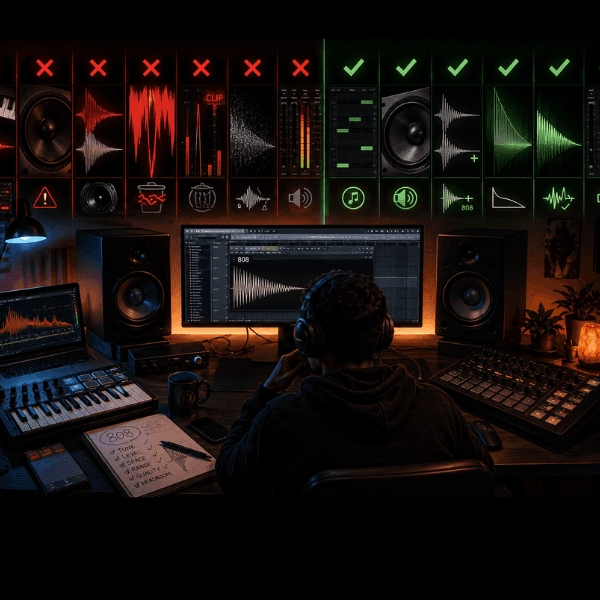
If you're new to producing, avoid these common mistakes:
Using an 808 that's out of key
Making the 808 too loud
Letting the kick and 808 fight for space
Overusing distortion
Ignoring clipping
Using low-quality samples
Forgetting to leave headroom for mastering
Fixing these issues alone can dramatically improve your mixes
Why Every Producer Talks About 808s
The 808 has become more than a sound.
It's part of hip-hop culture.
When producers say,
"This beat has crazy 808s,"
they're usually talking about the entire low-end foundation of the track—the bass that gives the instrumental its power, movement, and emotional weight.
Without strong 808s, many modern trap and drill records would lose the energy that makes listeners turn the volume up.
The Legacy of the Roland TR-808
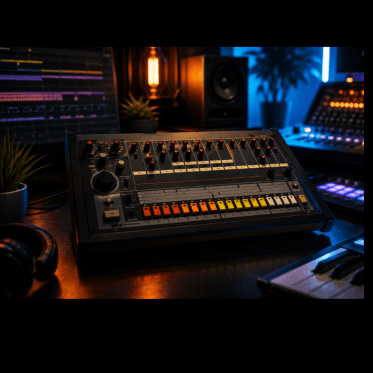
More than four decades after its release, the Roland TR-808 remains one of the most influential pieces of music equipment ever created.
What started as a discontinued drum machine became the heartbeat of modern music.
Every booming bassline, sliding sub, and chest-rattling low end owes something to that original machine from 1980.
The next time you hear someone say,
"Those 808s are insane,"
you'll know they're talking about a sound whose history helped shape hip-hop, trap, and countless other genres.
Can You Hear an 808 on Phone Speakers?
One of the biggest challenges producers face is making 808s sound good on every device.
Because smartphones and small laptop speakers can't reproduce extremely low frequencies, a clean sub-bass may almost disappear when played through them.
That's why professional producers often add subtle saturation or harmonic distortion to their 808s. These extra harmonics make the bass easier to hear on smaller speakers without sacrificing the deep low-end listeners feel in cars, headphones, and studio monitors.
A great 808 should translate across every listening environment—not just expensive studio monitors.
Why Do Some 808s Slide Between Notes?
One of the signature sounds of modern trap music is the sliding 808.
Instead of jumping instantly from one note to another, the bass glides smoothly between pitches, creating movement and tension throughout the beat.
These pitch slides became popular because they add emotion and excitement while helping the bass feel like part of the melody rather than just another drum sound.
Today, sliding 808s are a defining characteristic of trap, drill, rage, and melodic hip-hop production.
Why Every 808 Sounds Different
Not all 808s are created equal.
Some are clean, smooth, and round.
Others are distorted, gritty, aggressive, or intentionally fuzzy.
Producers choose different styles depending on the emotion they're trying to create. A soft, warm 808 may work perfectly for an emotional R&B record, while a heavily distorted 808 can completely change the energy of a hard trap or drill beat.
That's one reason no two producers sound exactly alike—their choice of 808 is part of their signature sound.
Why Producers Layer 808s
Although a single 808 can sound huge on its own, some producers carefully layer additional sounds to improve clarity and impact.
For example, a producer might blend a subtle click or punchy attack with the sub-bass to help the 808 cut through on smaller speakers.
Others layer harmonics or textures that make the bass feel wider without overpowering the mix.
The goal isn't simply to make the bass louder—it's to make it easier to hear while preserving the deep low-end that gives an instrumental its power.
Why the 808 Became a Cultural Icon
The 808 is more than a production technique.
It's part of hip-hop's identity.
Entire generations of producers have built their sound around its deep, unmistakable low end. Mention "808s" almost anywhere in modern music, and people immediately associate the term with trap, drill, hip-hop, and powerful bass.
Very few pieces of music technology have become so influential that their name turns into everyday language. The Roland TR-808 did exactly that, becoming both a legendary drum machine and one of the most recognizable sounds in music history.
The Future of 808s
As music production continues to evolve, so do 808s.
Artificial intelligence, advanced sound design, granular synthesis, and modern plugins allow producers to create bass sounds that were impossible just a few years ago. Despite these innovations, the foundation remains the same: a deep, emotional low end that supports the rhythm and enhances the feeling of the song.
Whether you're producing trap, cloud rap, drill, R&B, or experimental electronic music, the 808 continues to evolve without losing the character that made it legendary.
Frequently Asked Questions
Why is bass called an 808?
Bass is often called an 808 because modern hip-hop and trap basslines evolved from the bass drum of the Roland TR-808 Rhythm Composer, a legendary drum machine released in 1980.
Is every bass sound an 808?
No. Many bass sounds come from synthesizers, live bass guitars, or other instruments. In modern music, "808" usually refers to sub-bass sounds modeled after or inspired by the original TR-808 kick drum.
What genres use 808s?
808s are common in trap, hip-hop, drill, R&B, pop, EDM, Afrobeat, reggaeton, Latin trap, and many other modern genres.
Why do 808s sound so powerful?
808s emphasize very low frequencies that are felt physically as well as heard. Producers often enhance them with tuning, saturation, distortion, and pitch slides to create a fuller, more impactful sound.
Can you make a beat without 808s?
Absolutely. Many boom bap, jazz, rock, orchestral, and acoustic productions don't use 808s. However, in modern trap, drill, and melodic rap, 808s are often a defining element of the sound.
Why Producers Still Use the 808 Today
More than forty years after its release, the influence of the Roland TR-808 is stronger than ever. Modern producers no longer rely on the original hardware, but nearly every major DAW, drum kit, and sample library includes 808 sounds inspired by its legendary kick. From bedroom producers to Grammy-winning engineers, the 808 remains one of the most recognizable sounds in contemporary music.
Will 808s Ever Go Out of Style?
Probably not.
While production trends continue to evolve, the 808 has become one of the defining sounds of modern music. Producers constantly create new variations through distortion, saturation, pitch slides, and sound design, allowing the 808 to evolve with every generation of artists.
Can You Hear 808s on Phone Speakers?
Not always. Most smartphones and small laptop speakers can't reproduce the extremely low frequencies that powerful 808s occupy. That's why producers often use subtle saturation or harmonic distortion to create upper harmonics that make the 808 easier to hear on smaller devices while preserving deep sub-bass on larger speakers.
Why Do Producers Tune Their 808s?
Modern 808s play musical notes, just like a piano or bass guitar. If an 808 isn't tuned to the key of the song, it can clash with the melodies and chords, making the beat sound muddy or out of tune. Professional producers almost always tune their 808s to match the instrumental.
Why Do 808s Slide Between Notes?
Sliding 808s create movement and emotion within a beat. Instead of jumping instantly from one note to another, the bass glides smoothly between pitches, giving trap and drill music their signature flowing low-end. These pitch slides have become one of the defining characteristics of modern hip-hop production.
Why Do Some 808s Sound Distorted?
Not all distortion is bad. Many producers intentionally add saturation, clipping, or distortion to an 808 to help it cut through the mix and remain audible on smaller speakers. When used correctly, distortion adds character and energy without sacrificing the deep low frequencies.
What's the Difference Between an 808 and a Kick Drum?
A kick drum is designed to provide rhythm and impact, while an 808 often serves as both a drum and a bass instrument. Modern producers stretch, tune, and sequence 808s so they follow the melody of a song, giving them a much larger role than a traditional kick drum.
Can You Use More Than One 808 in a Beat?
Yes. Some producers layer multiple 808 sounds to combine different characteristics, such as a deep sub-bass with a brighter attack. Others switch between different 808 samples throughout a song to match changes in energy. The key is making sure the layers work together without creating unwanted frequency conflicts.
Why Are 808s So Popular in Trap Music?
808s became the foundation of trap because they combine rhythm, melody, and bass into a single sound. Their deep low-end creates energy in clubs, cars, and headphones while giving producers endless possibilities through tuning, pitch slides, and sound design.
Hear 808s in Different Styles
If you're curious how different producers use 808s, explore these collections:
Trap Beats — Hard-hitting 808s built for aggressive flows and modern rap.
Clams Casino Type Beats — Ethereal textures with deep, floating low end.
Drill Beats — Sliding 808s, dark melodies, and cinematic energy.
Pain Trap Beats — Emotional instrumentals where the 808 supports storytelling.
Soulful Boom Bap Beats — Modern low end blended with classic sample-inspired production.